
Nigeria: Panic Erupts in Zamfara as Bandit Warlord Threatens to Prevent Elections from Holding
A notorious bandit kingpin known as Gwaska has issued a direct threat to shut down all electoral participation in Anka Local Government Area
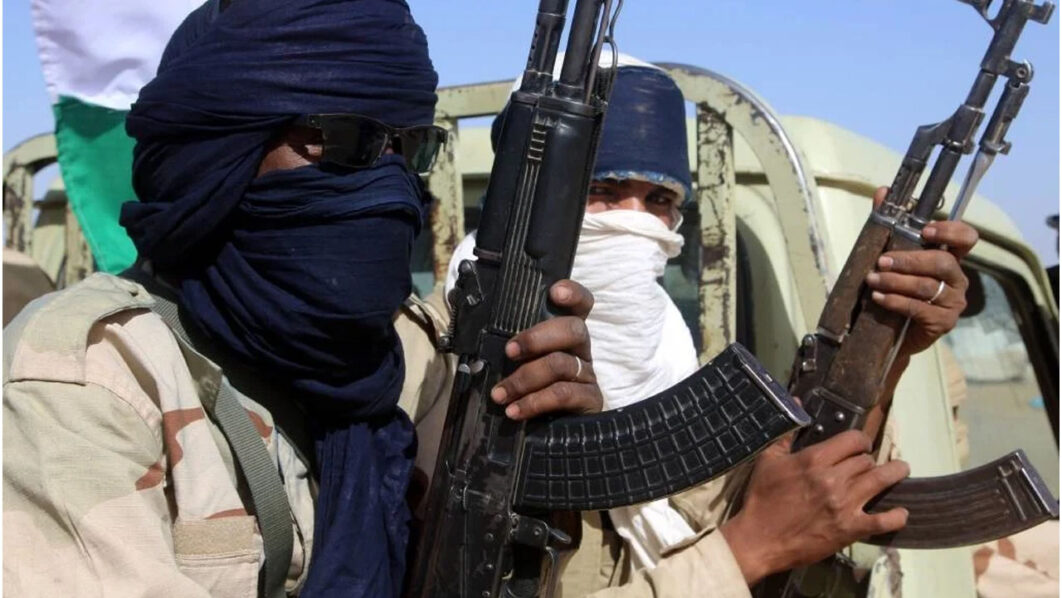
A notorious bandit kingpin known as Gwaska has issued a direct threat to shut down all electoral participation in Anka Local Government Area, in a brazen move security analysts say is aimed at consolidating total territorial control ahead of the 2027 general elections.
Gwaska’s threat is not mere bluster. Despite being shot in Bukkuyum in August 2026, the warlord has demonstrated alarming operational mobility, moving freely across Bukkuyum, Maru, and now Anka — a stark illustration of the Nigerian state’s failure to neutralise him.
Gwaska has framed the newly activated 28 Infantry Battalion in Anka as a Fulani extermination plot designed to force elections through.
Analysts say the claim is a deliberate narrative weapon aimed at two targets: local Fulani communities, whose grievances he is exploiting to recruit new fighters, and the wider civilian population, whose trust in the security forces he is determined to destroy.
His willingness to openly confront a newly deployed battalion suggests he believes the unit is not yet fully operational or embedded enough to pose a credible immediate threat. A high-profile act of defiance, experts say, would boost his standing among rival bandit factions while sending a chilling message to civilians: the state cannot protect you.
Foreign Fighters Pouring In
Gwaska is reportedly recruiting fresh fighters from Niger Republic. But security sources say this is not a reaction to the Anka battalion. It is part of a sustained, cross-border reinforcement pattern documented since the start of the year.
Traditional rulers in Zamfara had earlier confirmed that fighters from Mali, Burkina Faso, and Niger have been recruited into local criminal networks — transforming banditry from a localised plague into a sophisticated cross-border insurgency.
Democracy Under Siege
If Gwaska succeeds in shutting down political activities in Anka town, Bagege, Dangulbi, and Danjibga, civilian disenfranchisement in 2027 is almost certain.
Not because the state has formally ceded territory, but because the basic conditions for voting — security of persons, access to polling units, and freedom from intimidation — will have been systematically dismantled.
Even where elections proceed, voter turnout in Anka is expected to collapse, as residents weigh personal survival against civic duty.
Whether Anka faces more attacks in the coming weeks will depend on the posture of the 28 Infantry Battalion. If the battalion remains in a defensive crouch, further attacks on soft civilian targets and security outposts are more likely than not.
But if the battalion launches sustained patrols and intelligence-led raids, Gwaska may be forced to relocate his operations to less contested areas rather than absorb heavy losses.
Katsina Killing Sparks Fear of Reprisals
The Gwaska threat comes just days after the neutralisation of Wakiyu in Sabuwa LGA, Katsina State, a fighter affiliated with the Kachalla Maha group.
Though 200 kilometres apart, Anka and Sabuwa are linked by a porous forest corridor that bandit groups traverse with ease, with no continuous security checkpoints to stop them.
Wakiyu’s killing is unlikely to degrade Kachalla Maha’s network, which has shown resilience despite sustained operations by the Nigerian Army’s 17 Brigade. Instead, it is expected to trigger a reprisal cycle.
Communities in Sabuwa beyond Damari, particularly around Matazu — which Wakiyu was reportedly linked to attacking — are now at high risk of retaliatory violence. Bandit groups in Katsina have a history of responding to leadership losses with indiscriminate attacks on civilians perceived as complicit with security forces.
On May 2, 2026, after security forces killed bandit leader Mohamed Fulani, his men launched a reprisal attack on Gwalgoro village in Kankara LGA, killing 11 civilians.
Meanwhile, the burning of a grain-laden trailer on the Dansadau–Magami road and a circulating audio threat to burn 250 vehicles along the Gusau–Dansadau corridor are believed to be the work of the same faction behind the recent spate of vehicle burnings in the Dansadau axis.
The group has shown both the capability and intent to enforce an economic blockade on the route, further tightening its grip on Zamfara’s lifelines.
Comments (0)